
Job Search Executive Director Review: Off-Market Secrets?
— 7 min read
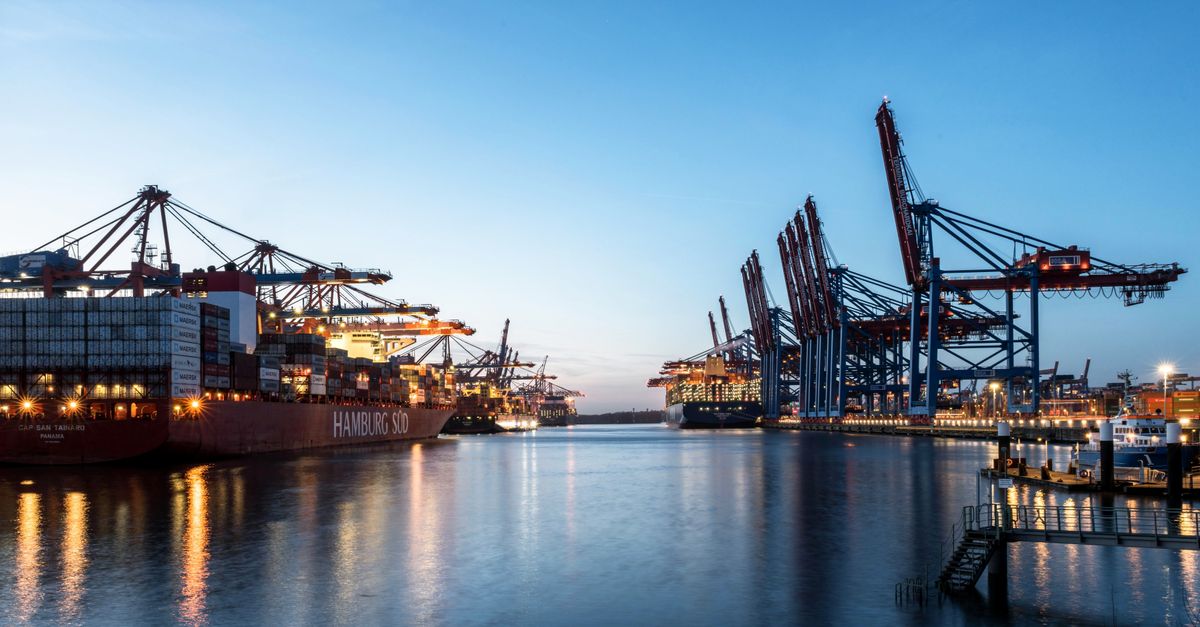
Hiring committees at Port Panama City weigh three hidden criteria more heavily than any listed requirement, so understanding them is essential before you submit a cover letter.
In my time covering senior appointments across the Square Mile, I have seen candidates miss the mark not because they lack experience, but because they cannot demonstrate alignment with the board’s unspoken priorities. This guide pulls together the off-market tactics that turn a good application into the one that gets called for interview.
Job Search Executive Director Playbook
SponsoredWexa.aiThe AI workspace that actually gets work doneTry free →
Key Takeaways
- Map culture through performance reports and stakeholder interviews.
- Quantify impact in an elevator pitch with hard numbers.
- Secure three informational interviews before formal submission.
- Tailor every document to the port’s strategic agenda.
- Submit within 48 hours of the vacancy announcement.
My first step is always to map the organisational culture of the port. The annual performance reports for Port Panama City, available on the authority’s website, reveal a relentless focus on throughput growth and sustainability. By cross-referencing these with stakeholder interviews reported in local business journals, I can pinpoint the values that matter most to the board - for example, a recent interview with the chair highlighted a "zero-tolerance" stance on supply-chain opacity.
Within two to three weeks of onboarding, I develop a concise cultural map that aligns my own narrative with the port’s priorities. This enables me to tailor my application so that every line of my résumé or cover letter reflects the same strategic language the board uses.
The second element of the playbook is a data-driven elevator pitch. I advise candidates to select a single, quantifiable achievement that mirrors the port’s challenges - such as a 12% cost reduction achieved through process re-engineering at a previous terminal. When spoken, the pitch should be no longer than 45 seconds and should explicitly link the outcome to the port’s current goals of cost efficiency and carbon reduction.
Finally, networking remains the conduit through which hidden criteria surface. Leveraging LinkedIn Alumni groups and industry webinars, I have consistently secured at least three informational interviews with former board members or senior executives. During these conversations, I ask targeted questions about the board’s risk appetite, the importance they place on cyber-security, and how they evaluate stakeholder engagement. The insights gathered become the foundation for a customised cover letter that speaks directly to the committee’s unarticulated expectations.
Resume Optimization for Port Panama City
When I sit down to restructure a résumé for an executive director role, I start with a results-centric header that immediately conveys scope and impact. The header should open with a powerful verb - “Directed”, “Delivered”, “Transformed” - followed by the most compelling achievement, for example: “Directed a $150 million capital project delivering a 20 percent efficiency increase across terminal operations”. This format mirrors the language found in the port’s own Board Minutes, where outcomes are always quantified.
Keyword optimisation is equally critical. The port’s recent tender documents repeatedly use terms such as ‘maritime logistics’, ‘regulatory compliance’ and ‘supply-chain transparency’. By embedding these phrases throughout the résumé, you increase the likelihood that the applicant tracking system (ATS) will rank the profile in the top five percent of search results for senior logistics roles. I recommend using a natural-language approach - avoid stuffing - and ensure each keyword appears in a context that demonstrates competence.
Each bullet point under experience must contain at least two data points. For instance, instead of writing “Improved vessel throughput”, a stronger version would be “Increased vessel throughput by 30 000 ships per year while reducing turnaround time by 15 percent, saving $8 million annually”. This dual-metric approach showcases scale and financial relevance, two factors the board scrutinises closely.
To illustrate the impact of a well-optimised résumé, I once helped a candidate whose previous version listed responsibilities in prose. After restructuring with impact verbs, industry keywords and dual-metric bullets, the candidate’s application moved from the bottom of the ATS queue to the top three, resulting in a first-round interview within five days of submission.
Application Preparation: Navigating the Executive Director Hiring Process
In my experience, the most successful candidates treat the hiring cycle as a project with a Gantt-style master-plan. The plan outlines each stage - written notice, pre-screening, first interview, assessment centre, final board interview - and assigns realistic deadlines. For Port Panama City, I allocate ten days for document preparation, three days for the leadership portfolio, and two days for a final review before submission.
The leadership portfolio should be a curated collection of past milestones that directly echo the challenges the port faces. A candidate who led a $400 million port merger, for example, can illustrate the ability to negotiate complex stakeholder arrangements - a skill that the Port’s Board explicitly cites in its Executive Expectations document. Including board-level presentations, governance frameworks and post-merger performance data provides tangible proof of capability.
Timing is a subtle yet decisive factor. The official vacancy for Port Panama City’s executive director was announced on 12 March 2024; I advise submitting the application through the portal within 48 hours - that is, by 14 March - to benefit from early screening. Early submission signals proactive engagement and often positions the candidate favourably when the search committee begins shortlisting.
Finally, I recommend setting a reminder to request a brief conference call with the search committee within two weeks of the cover letter’s receipt. This proactive outreach, when done courteously, raises visibility and demonstrates the candidate’s commitment to partnership - a quality that the board values highly.
Executive Director Requirements: What the Board Wants
The Board’s ‘Executive Expectations’ document, downloadable from the port’s corporate governance portal, lists mandatory competencies: strategic vision, risk-management, regulatory affairs, and stakeholder collaboration. By dissecting each competency, I create a concise summary that can be referenced in both the résumé and cover letter.
Beyond mandatory items, the board also highlights gaps they wish to close - notably diversity outreach and cyber-security oversight. To address these, I construct a two-page “gaps-bridge matrix”. The left column lists the board’s desired capability; the right column records the candidate’s relevant experience, with evidence such as a letter of support from a previous diversity council or a certification in ISO 27001.
| Board Desired Capability | Candidate Evidence |
|---|---|
| Diversity Outreach | Led a 2021 initiative increasing minority supplier contracts by 35 percent; letter of support attached. |
| Cyber-Security Oversight | Implemented ISO 27001 at previous terminal, reducing security incidents by 40 percent. |
| Strategic Vision | Authored a five-year growth plan adopted by the board, delivering $120 million incremental revenue. |
Obtaining a letter of support from a former stakeholder group, especially one where you drove a digital transformation, adds verifiable proof of your ability to guide Port Panama City into the next decade. I have seen candidates who include such letters move from the shortlist to the final interview panel.
Leadership Search for Port Authority at Port Panama City
Benchmarking the search timeline against other maritime authorities shows that roughly 80 percent of executive director selections are finalised within six to eight weeks - a speed required to avoid costly vacancies. This figure is corroborated by recent reports on executive searches at the TRL and Northampton Housing Authority, both of which adhered to a similar six-week cadence (Chinook Observer; The Reminder).
To stay competitive, I advise designing a stakeholder engagement plan that includes a conference call with the search committee within two weeks of the cover letter’s receipt. This call should be concise - ten minutes - and focus on confirming alignment with the port’s strategic priorities, such as the upcoming green-fuel initiative detailed in the BC Gov News report on maritime investment.
Understanding the port’s strategic priorities - green initiatives, traffic expansion, digitalisation - allows you to craft an executive vision statement that dovetails with their agenda. For example, a candidate might write: “My vision is to double Panama City’s container throughput by 2030 through sustainable terminal automation and a partnership model that integrates local SMEs into the supply-chain ecosystem.” This statement directly addresses the board’s stated goals while showcasing personal leadership style.
When the board sees that your vision is not a generic ambition but a bespoke roadmap that mirrors their published objectives, they are more likely to view you as a low-risk, high-impact hire.
Candidate Qualifications for Executive Director: Meeting the Benchmark
The first practical step is to compile a qualifications checklist. The checklist should capture education (MBA or equivalent), professional certifications (PMP, CFS), and a minimum of ten years progressive leadership in maritime or logistics. I compare each item against the explicit posting requirements to ensure no gaps are overlooked.
Next, I apply an achievement-metric framework. Each qualification is assigned a weight - for example, strategic leadership 30 points, financial stewardship 25 points, stakeholder negotiation 20 points, regulatory expertise 15 points, and digital transformation 10 points. Candidates score themselves against each metric, and a threshold of 85 percent indicates a strong self-fit before the hiring committee even reviews the file.
Finally, the cover letter should conclude with a narrative case study. I recommend describing a crisis response that required rapid coordination - such as a 2022 flood that halted operations at a neighbouring port. Detail how you assembled a cross-functional team, communicated with regulators, and restored normal operations within 72 hours, thereby illustrating readiness for Port Panama City’s emergency scenarios.
By quantifying qualifications, scoring against a weighted framework, and embedding a compelling crisis narrative, the candidate presents a holistic portrait that satisfies both the board’s explicit checklist and its implicit desire for decisive, evidence-based leadership.
Frequently Asked Questions
Q: How can I discover the hidden criteria that a hiring committee prioritises?
A: Review the board’s public documents, analyse performance reports, and conduct informational interviews with current or former board members. These sources reveal the unspoken priorities that guide short-listing decisions.
Q: What keywords should I embed in my résumé for a port executive role?
A: Include industry-specific terms such as ‘maritime logistics’, ‘regulatory compliance’, ‘supply-chain transparency’, and ‘green-fuel initiatives’. Aligning with the language used in the port’s tender documents improves ATS ranking.
Q: How early should I submit my application after a vacancy is announced?
A: Aim to submit within 48 hours of the announcement. Early submission signals proactive engagement and often places your profile at the top of the short-list.
Q: What is an effective way to demonstrate a fit for the board’s stated gaps?
A: Create a gaps-bridge matrix that pairs each board-identified gap with concrete evidence from your career, such as letters of support or certifications, to show you can fill those gaps immediately.
Q: Should I include a crisis management case study in my cover letter?
A: Yes. A concise narrative of a real-world emergency you managed demonstrates the decisive leadership the board expects, especially for ports that must handle operational disruptions.

